Woh Jo Qarz Rakhtay Thay by Farhat Ishtiaq – Complete PDF Download
urdunovelspdf.com
| Novel Details | Information |
|---|---|
| Novel Name | Woh Jo Qarz Rakhtay Thay (fuller title: Woh Jo Qarz Rakhtay Thay Jaan Par) |
| Author Name | Farhat Ishtiaq |
| Novel Genre | Social Romantic, Family, Emotional Urdu Novel |
| Language | Urdu |
| Novel Status | Complete |
| Availability | Read Online and Complete PDF Download |
What Is Woh Jo Qarz Rakhtay Thay About?
Start with the title, because Farhat Ishtiaq means it literally. “Qarz” is a debt. The people in this novel hold debts, but no bank holds their accounts. Their debts are made of gratitude, guilt, honour and love, and they are carried, in the fuller title’s words, upon their lives. The novel asks a simple, uncomfortable question: if your parents made a mistake, do you owe the repayment? And if you pay it, what part of yourself do you pay with?
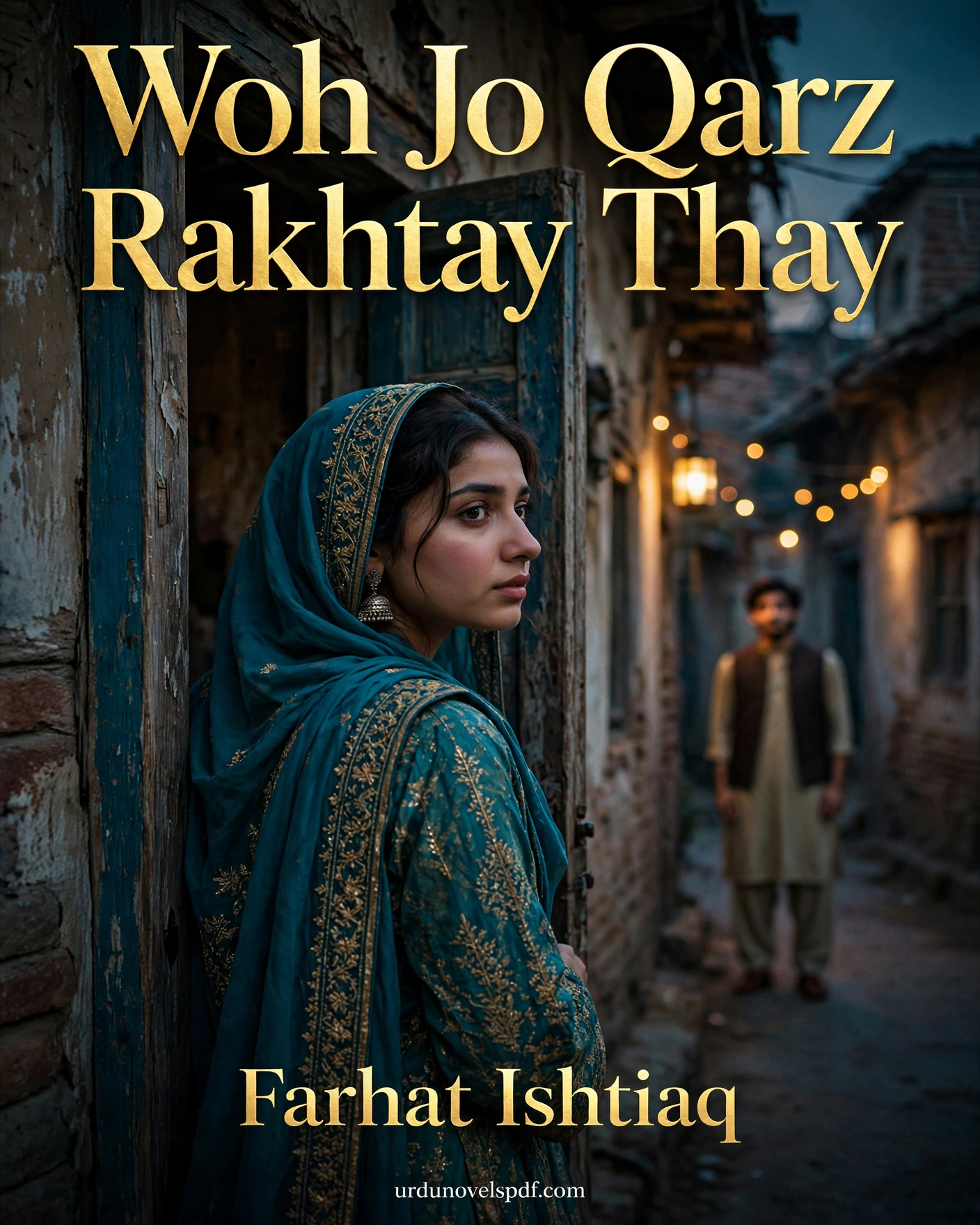
Fariya, also spelled Fariha in some listings, is the young woman at the centre of that question. She is searching for identity and belonging, and life places her in her grandparents’ home. She is welcomed and respected there, but she soon finds that her mother’s past is the locked room in the house. Her mother once made a choice that damaged her relationship with her own parents, and Fariya has grown up inside the consequences of that choice without fully understanding them. Learning the truth hurts, and it also frees her: at last she can see herself clearly, as someone more than just her mother’s daughter.
Saad Munir is the other half of the story. He and Fariya are friends before they are anything more, and readers remember that friendship fondly: the teasing, the everyday closeness, the slow realisation that friendship has become love. Saad is described as a caring, gentlemanly hero, steady rather than showy, and that steadiness is what makes the story’s turn so painful. When Fariya loves him, she is not choosing a fantasy. She is choosing a real, good person, which is exactly why giving him up costs so much.
The turn comes when family duty and old obligations press on them both. Misunderstandings add to the pressure, but the real obstacle is Fariya’s conviction that following her heart would repeat her mother’s history and wound the blood relations she has come to honour. So she sacrifices her love. The key word, repeated by every thoughtful reader of this book, is “choice”. Fariya is not tricked, and she is not simply crushed by fate. She decides, with her eyes open, that her family’s respect matters more than her own happiness, and she accepts the price. That decision is the novel: everything before it leads there, and everything after it is its echo.
The ending carries that echo. Readers describe anger, love, happiness, pain and hurt across the book, and relief mixed with lasting melancholy at the end. A final letter from Saad is the moment most readers name when they talk about the book, and it deserves to be read in full, in context, rather than reduced to a spoiler here. What can be said safely is that the ending does not pretend the sacrifice was free, and it does not undo it with a last-minute rescue. It honours the choice Fariya made, and it lets the sadness stand.
Title Meaning and Spelling Variants
“Woh Jo Qarz Rakhtay Thay” breaks down as “those who held debts”. Add “Jaan Par” and it becomes “those who held debts upon their lives”. That is the novel in one line: people carrying obligations that cannot be settled with money, only with patience, forgiveness and sacrifice.
You will find the book under many Roman Urdu spellings, including “Wo Jo Qarz Rakhte The Jaan Par”, “Wo Jo Qaraz Rakhte The Jan Par” and “Woh Jo Qarz Rakhtay Thay Jaan Per”. They are the same novel. If a page under this title names completely different lovers or promises a happy reunion, it does not match the sources that agree on Fariya and Saad, and it should not be trusted as a guide to this book.
Main Characters
Fariya (Fariha)
The heroine. Principled, pure-hearted and thoughtful, she moves from confusion about her mother’s past to a deliberate, painful choice of her own. Readers praise her for choosing family without losing her dignity.
Saad Munir
The hero. A caring gentleman whose friendship with Fariya grows into love. His steadiness, and his final letter, are what readers remember longest.
Her grandparents shape the story as a home and a moral world, but the sources used here do not give them as separately named characters with their own plot, so this page does not invent details for them. Two honestly drawn characters are better than a cast list padded with guesses.
Main Themes
Emotional Debt
Debts of guilt, gratitude and honour bind people as tightly as any loan, and this novel follows one such debt to its end.
Chosen Sacrifice
Fariya gives up love by choice, not by force. That freedom is what makes the sacrifice meaningful, and heartbreaking.
Family Honour
Honour here is not an abstract rule. It is the respect of real grandparents, a real home, and the bonds Fariya refuses to break again.
Identity
Fariya must learn who she is beyond her mother’s story, and her final decision is her answer to that question.
Love and Loss
Love is genuine in this novel and still loses to duty. That tension, not a villain, drives the tragedy.
Healing
Even in sadness, the novel moves toward understanding and quiet relief, rather than bitterness.
Is the Ending Happy or Sad?
Sad, and bittersweet. That is the consistent report from reader reviews, from guides to Farhat Ishtiaq’s novels, and from the “sad ending” tags on listing sites. One reader puts it most simply: sometimes we do not get a happy ending, and that does not mean we should ditch the story. The ending’s sadness is the point, not a flaw: it is the cost of a choice Fariya makes for reasons she believes in.
Readers who want only light romance with a guaranteed happy ending should know this before they begin. Readers who enjoy serious, emotional family stories will find the ending satisfying in a deeper way: it respects its characters too much to lie to them, or to you.
About Farhat Ishtiaq
Farhat Ishtiaq, born 23 June 1980 in Karachi, began writing for Urdu digests in 2004 and became one of Pakistan’s most beloved novelists and screenwriters. Her work focuses on Pakistani society, on family, and on love under social pressure. Her best-known novels include Humsafar, Mata-e-Jaan Hai Tu, Diyar-e-Dil and Dil se Nikle Hain Jo Lafz, and her television work includes Humsafar, Diyar-e-Dil, Udaari and Yaqeen Ka Safar. Woh Jo Qarz Rakhtay Thay comes from the same digest tradition, and it shows the same strengths: emotional honesty, strong family portraits, and a heroine whose inner life matters more than any plot twist.
No confirmed television drama of this novel was found during research. Forum talk once mentioned a possible Hum TV remake, but that talk itself left the project unconfirmed, so no drama, cast or broadcast date is claimed here.
How Many Pages? An Honest Note
Listings disagree: one PDF listing says 97 pages, a book database says 240 pages. Both cannot be the same edition’s count, and different editions and PDF layouts explain the gap. This page therefore gives no single page count as fact. What matters is that the novel is complete, in Urdu, and available here in full.
PDF Download: Woh Jo Qarz Rakhtay Thay by Farhat Ishtiaq
Read or download Woh Jo Qarz Rakhtay Thay by Farhat Ishtiaq, the complete novel, for free. Click the button below and your file will begin in 10 seconds:
Frequently Asked Questions
Who wrote Woh Jo Qarz Rakhtay Thay?
Is Woh Jo Qarz Rakhtay Thay complete?
What is the story in brief?
Who are the main characters?
Is the ending happy?
Is Woh Jo Qarz Rakhtay Thay Jaan Par the same novel?
Is there a drama of this novel?
Can I read it online for free?
How many pages is it?
More Urdu Novels You Will Love
Explore more complete Urdu novels free on Urdunovelspdf.com:
Final Verdict
Woh Jo Qarz Rakhtay Thay by Farhat Ishtiaq is a novel about debts that money cannot pay and choices that cannot be unmade. Fariya’s journey, from her grandparents’ home through her love for Saad Munir to her final chosen sacrifice, is sad, tender and honest, and it is why this book is still read and discussed. It will not hand you a happy ending, and it will give you something rarer: a story that respects its characters’ choices, and yours as a reader.
The complete novel is available for free. Click the Read Online or Download button above, your file will begin in 10 seconds, and start reading today.